Monday, July 25, 2005

Warming up for Sex Entries

Some writer I greatly admire but strangely can't remember at this precise moment said, in effect, that the end of fiction writing is to describe the sex act, "...but how do you get there?"** What's amazing about whoever it was that wrote that - the name might come to me before I finish writing this entry - is that you'd think he, of all people, would just dive in. But no, even he was scared. I'm scared. And not just about the act, but love in all its guises and expressions. My summary: It's smart to be scared, but cowardly not to dive in - if I may be so crude - when the prize is nearly won. One steps into the unkown, with prayers of thanks. 


My very favorite book on love and sex is titled On The Way To The Wedding, by Linda Schierse Leonard, Pub: Shambhala, 1986. Here's the table of contents:


The Wandering


1. Through the woods


2. Prince Charming and the Special Princess


3. The Ghostly Lover


4. The Bewitchment


5. The Demon Lover


6. The Ring of Power


The Loving


7. Into the Clearing


8. The Missing Bridegroom and the Woman in Black


9. Beauty and the Beast


The Wondering


10. The Devine wedding


11. The Veil


12. The Vow


13. The Ring of Love


So, there's the menu. Enjoy.


The best nuts and bolts book I've ever read, which probably should be read together by the lovers, but in cold hard practice read separately is probably best, except perhaps by teenage married couples, is titled The Art of Sexual Ecstasy, by Margo Anand. Hot! Handle with care: For adults only. (Teenagers, some, can certainly be "adult.")


The single biggest and most surprising conclusion I've come to about sex, beside the obvious that everything goes best in marriage, is that the bond ultimately is fueled by the senses, but is maintained by somewhat frightening psychological connections. Marriages fail, obviously, at least obvious to me now, when these intricate psychological connections are not in place.


The Leonard book given first above, treats those connections in a sweet, poetic way; they can also be discussed bluntly in the manner of Freud, but in today's climate of anti-psychoanalysis I'll probably avoid that angle until I simply can no longer resist. May I leave you hanging with a promise to return?


Love,


Barry


** Norman Mailer (Give the guy a break!)


Saturday, July 23, 2005

Competition / Gamesmanship

"When you play Bobby, it's not a question
  of whether you win or lose, it's a question
  of whether you survive."

               
- Boris Spassky
             Soviet Russia: World Champion
             chess player up to 1972 when he
             lost to Fischer in a famous match in
                   Iceland.

Robert J Fischer is now a citizen of Iceland. The
United States government took away his passport
when, in 1992, he entered the former Yugoslavia
to play another match with Boris Spassky for a purse
of five million dollars. Fischer ignored the US Government's
order and for a while lived in Japan where he married a
Japanese woman chess champion.

The match in the former Yugoslavia was virtually an
exhibition. Fischer won, but the purse was split
3 million for Fischer, and two million for Spassky.
You wouldn't be too far off to conclude they were friends,
and are still friends. Boris Spassky is an admirable man,
educated, sophisticated, and humane. I met him at
a chess tournament at a hotel near LAX, Los Angeles.
He is witty, urbane, has lived in Paris, and does
what educated people do: attend the opera, the theater,
and seek culture and Peace.

If any chess players read this, and are curious about
precisely what Spassky means when he talks about
"surviving" Bobby's chess skill, take a look at game one
from the 1971 Interzonal match Fischer vs Bent Larsen.
played in Denver. In that game Fischer sacrificed his Queen,
early in the game, in the center of the board, yet won
handily against a world class Grandmaster. Additionally
Fischer won the next five games as well, winning the
match 6-0. Bent Larsen suffered a psychological collapse.

Barry

Thursday, July 21, 2005

Hunting Rabbits

Rabbits are beloved in America, correct? I mean there's Bugs Bunny, a charming, humorous do-gooder who knows full well how clever he is when he opens, "What's up Doc?" Such poise, such self-assurance, even insouciance. Only a monster would ever dream of harming a rabbit. Then there's dear, sweet, adventurous Peter Rabbit, who unwisely disobeys his mother and almost gets caught by the farmer.  


Not a shred of shame surfaces when I freely admit that I have killed thousands of rabbits: I've dug them out of their warren, sent ferrets down their holes to chase them out into nets, caught them with dogs, shot them with rifles, trapped them with buried steel jaws that grab them, and, most efficient, poisoned them with strychnine sprinkled on thistle roots.


All of that carnage was perpetrated before I was sixteen years old, quite willingly, while on vacation, and for a while living on my Uncle Hugh's sheep station in Australia. Rabbits, you see, destroy sheep grazing land.


Rabbits even in the semi-wild have communal meeting places where they all defecate their small pellets of what looks like finely ground grass turned brown. Their droppings form mounds about the length of their bodies.  A good place to leave a root pellet of poison is near one of those mounds dropped into a strike of a mattuck which leaves freshly turned soil. The next morning the dead can be found, white belly up, next to the disturbed earth. In one night we brought home for skinning nearly 400 rabbits whose skins brought in about 40 Pounds, Aust. All of that was so long ago it would be impossible to translate that amount into present day dollars. (Well, I do remember my Uncle buying a used motorcycle for 150 pounds.) For us children it was a fortune. One time the money was taken from us, because the amount was too large for "children." The manager of one of the properties bought his own place, using what he'd saved from salary and earned from rabbit skins.


Rabbits caught in traps, or pulled out of burrows, have to be killed. It's done by stretching the rabbits neck while holding both legs with the other hand. Little boys, I swear, think nothing of it.


I believe this truth about young boys is capitalized on by MS Rowling in her six books about children. Oh, it's covered over, but just beneath the surface the motor of the fiction is softly humming.


Barry


Tuesday, July 19, 2005

Star Gazing

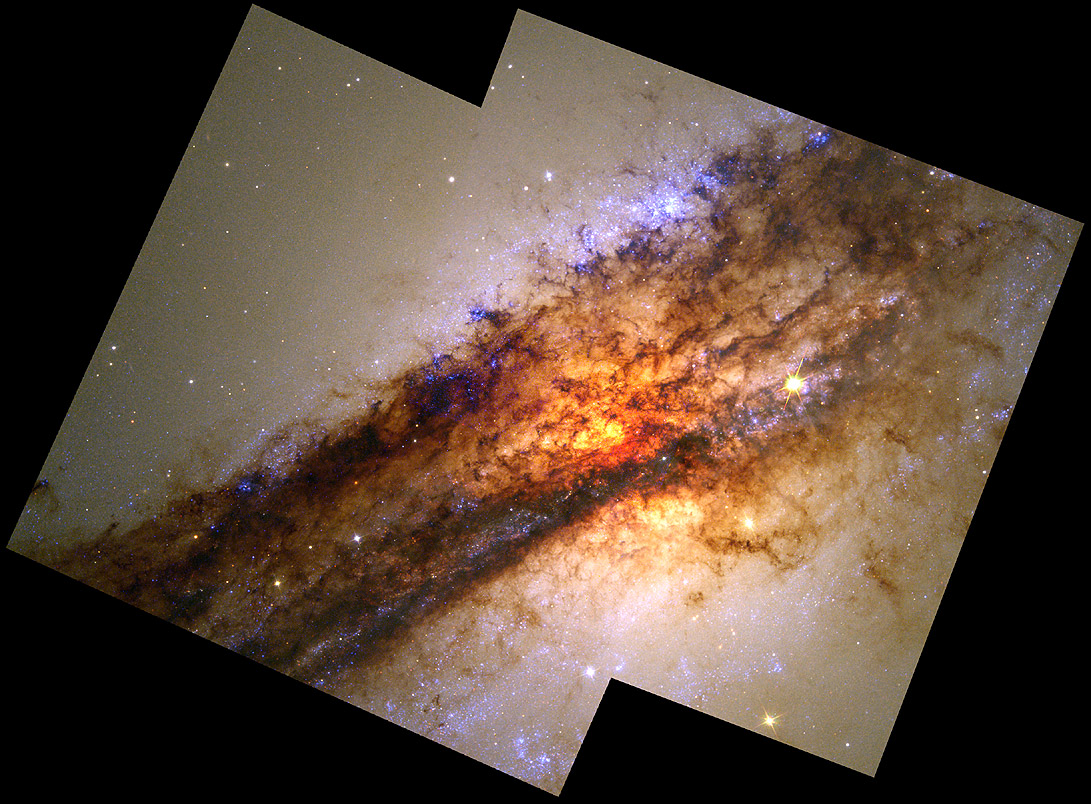
http://antwrp.gsfc.nasa.gov/apod/image/0204/CenA_wfpc2_big.jpg


Via Nasa of course, and the Hubble telescope, but more immediately from spearsJD a most admirable gentleman on a writer's message board. The object is 10 million light years away. The blue stuff is new stars, suns, in the making. The material for this may come from a Black Hole. Andromeda, a nearby Galaxie to our Milky Way is only 2.2 million light years away. 


Barry


(More on space later. Maybe tomorrow) 

Riding a Horse

Riding a wave was fun to write about so I thought I'd try writing about riding a horse.


Of course I'm not talking about riding a race horse. Those are huge, and I am now, and have been since adolescence, twice the weight, or more, of a jockey. I'm talking about riding a pony. Comfortable-to-ride work horses are ponies. Cowboys rode ponies in the movies, and most likely in real life. I never rode a horse in Texas, and I don't want to run afoul of Texas horse mores and fashion. I'm talking simply ol' Australia, the South of France, where, believe it or not there are, or used to be recently, wild horses, protected, and California. Tall horses are beautiful, but absolutely no fun to ride.


I believe horses were not native to the Americas, nor to Australia. The Spaniards introduced horses to the Americas, beginning in 1521 or a bit earlier, and the British introduced horses to Australia. The North American, Native Americans rode descendents of those Spanish military ponies. Even in Australia there was a Spanish influence; commonly used, even today, is the 'Spanish bit' a typically cruel mouth piece that tortures the horse with a bend in the mouth piece, and a small chain under the bottom jaw. Purpose: to deal with a horse that learns to hold the bit between it's teeth as a way to resist rider commands.


The only time I can remember being thrown by a horse was off a Shetland Pony, an almost miniature horse, when I was about ten, or younger. That animal was mean! Acquired for children's use but soon gotten rid of. How I hurt! both in pride and butt. The little beast ran straight for home and was found standing, waiting to be fed again.


The Australian work horses I rode, Taffy, Tommy, and Donny, and others, ponies all, were a pure joy to ride: soft moving, going to a canter right off avoiding an annoying trot, they had incredible endurance even in blazing noonday sun, and a friendly disposition. With what great joy I remember one or another of those horses rubbing their nose up and down my front or back to both relieve an itch, and to be affectionate. Horses talk. Out of respect, and love, and from practicality, I was taught to walk, leading the horse, to give the animal a rest. The land on which I mostly rode was hilly. Marino sheep are raised for wool in Australia on land that surprisingly resembles land in Spain where the Marino sheep originated. The rocky hills grew grass ideal for sheep, and the sheep had to walk long distances to find the grass, another factor which favored the growth of the best wool. The sheep had to be protected from crows (who pecked out the eyes of lambs) and from grass destroying rabbits which (Americans fascinated by bunny rabbits don't like to hear this part) have to be destroyed to protect not only the sheep's source of food, but the land itself. Australia has been deeply scarred by too eager poisoning of trees to allow grass to grow, but at the cost of allowing hideous soil erosion made possible by the absence of soil-binding properties of tree roots.


So, you can see how imperative it has been to breed ponies for Graziers, the men and women who grow the wool for our fine suits and sweaters and other clothing, and for military uniforms. Without that imperative I'd never have been so blessed with many thousands of hours in the company of fine riding horses, soft moving, stong ponies who are so smart, and pretty, and loving.


Barry


Saturday, July 16, 2005

Body Surfing

A good surf, like a good woman, is hard to find. You've probably seen documentaries about professional surfers waiting around, even in surf glamor places, for good waves. Well, I'm not a board rider, I just ride on my tummy, arms beside me, head down most of the time riding the 'lady' to the beach: Heaven, delicious, voluptuous pleasure, and heathful too.


Without bragging I've body surfed in Santa Monica Bay Will Rogers State Park Beach, A long stretch of beaches just North of Sydney harbor Australia, Hawaii, and 'Mexpipe' in Puerto Escondido, Oaxaca, Mexico where every year in November the surf is big enough to attract big name board surfers for competitions. The name Mexpipe is meant to bring to mind "The Pipe" in Hawaii.


My next surfing adventure will be with my son, age 10, when we bike, wearing our swim suits underneath our shorts in lieu of underwear, on the Santa Monica bike path from Venice to Will Rogers State Park. We'll chain our bikes to a fence, and surf just a few yards from the path. I've done it before. The surf isn't much, but when you're an addict you can turn the plainest wave into a worthwhile date.


I watched a professional surf board competition at Playa Zicatella, the beach at Puerto Escondido, Oaxaca. It was sponsored by a French clothing manufacturer who complained to me about the lack of support from local merchants. He didn't know the score. Puerto Escondido is on the edge of what is virtually an Indian reservation in a Mexican State that is 58% Native Mexicans. If truth be told the surfing is taken as an affront. Mexican tourists from Mexico City swarm to Puerto Escondido every summer and many of them drown in the quick moving Pacific Ocean. They'd never seen the ocean before. There are plaques commemorating the dead cemented into the sides of huge rocks half in the water at high tide.  But generally the drownings, an annual event, is denied.


Playa Zicatela, three miles long, from Christmas to New Year, is densely populated. Every year a casual walk, and back, will reward one with sight of some of the most splendid and inspiring nudes you will ever see, and yes, in very Catholic Mexico. Women,and men, nude. Takes your breath away, partly because it is so unexpected.


But, of course, it's the health benefits that count, right? Good clean air, exercize, vitamins from the sun, resulting in pure thoughts and god-fearing ways. Summertime... and the swimin' is easssssy...


Barry


Thursday, July 14, 2005

Language Music, Music Language

Does instrumental music 'talk'? Does language on the page make music? Music plus language, opera for example, enrolls lifelong adherents, supporters and practictioners.


The latter used to embarrass me because secretly I thought opera was kinda silly, even weird. Well, I still think it's a bit weird, but then if I were single I'd think nothing of having a weird girl friend. Weird can be exciting. When Tito Gobi, as the tough policeman in Tosca, alone onstage 'speaks' "Tosca, you make me forget God," I'm thoroughly involved.


Music, all kinds, and writing, all kinds, I can handle, variously like, love, or despise, with confidence that intelligent discussion is quite possible on all of that. But how about painting? I've just acquired a five inch by six inch book - from Daedalus Catalogue - devoted to reproductions of, and commentary on, Van Gogh. Although very small the reproductions are sublime. The graphic arts, the wildly various works of 'Vincent,' as he signed his works, resist analysis and purposeful discussion far more than do writing and music. Why? All those swirls made by Vincent were to bind the world together so we'd love it, and love him too? Why didn't more people love Vincent? Do you love Vincent? I love Vincent, but he'd probably scare me too. What more can be said? Plenty, but not by me, unhappily.


Someone's gonna have to help me stop decrying music that doesn't last any longer than about six minutes. Yet, that's apparently about the average attention span of the world's music listeners. Anything longer doesn't sell. Ipod, is that how it's spelled? Right now that item is saving Mac, or whoever makes the million song-holding recorder/player. Why do you need a million different songs immediately available? How many operas would an Ipod hold? I'll wait while you Google.


Aesthetics


Main Entry: [2]aesthetic
Function: noun
Date: 1822
1 : plural but singular or plural in construction : a branch of philosophy dealing with the nature of beauty, art, and taste and with the creation and appreciation of beauty
2 : a particular theory or conception of beauty or art : a particular taste for or approach to what is pleasing to the senses and especially sight <modernist aesthetics> <staging new ballets which reflected the aesthetic of the new nation —Mary Clarke & Clement Crisp>
3 : plural : a pleasing appearance or effect : BEAUTY <appreciated the aesthetics of the gemstones>


That might be what we're going over here. I'd settle for the abstraction that there's plenty of room in our brains to store and savor all art forms, and mingling of art forms.  But, just the same, we can reserve the right to have special favorites.


Barry